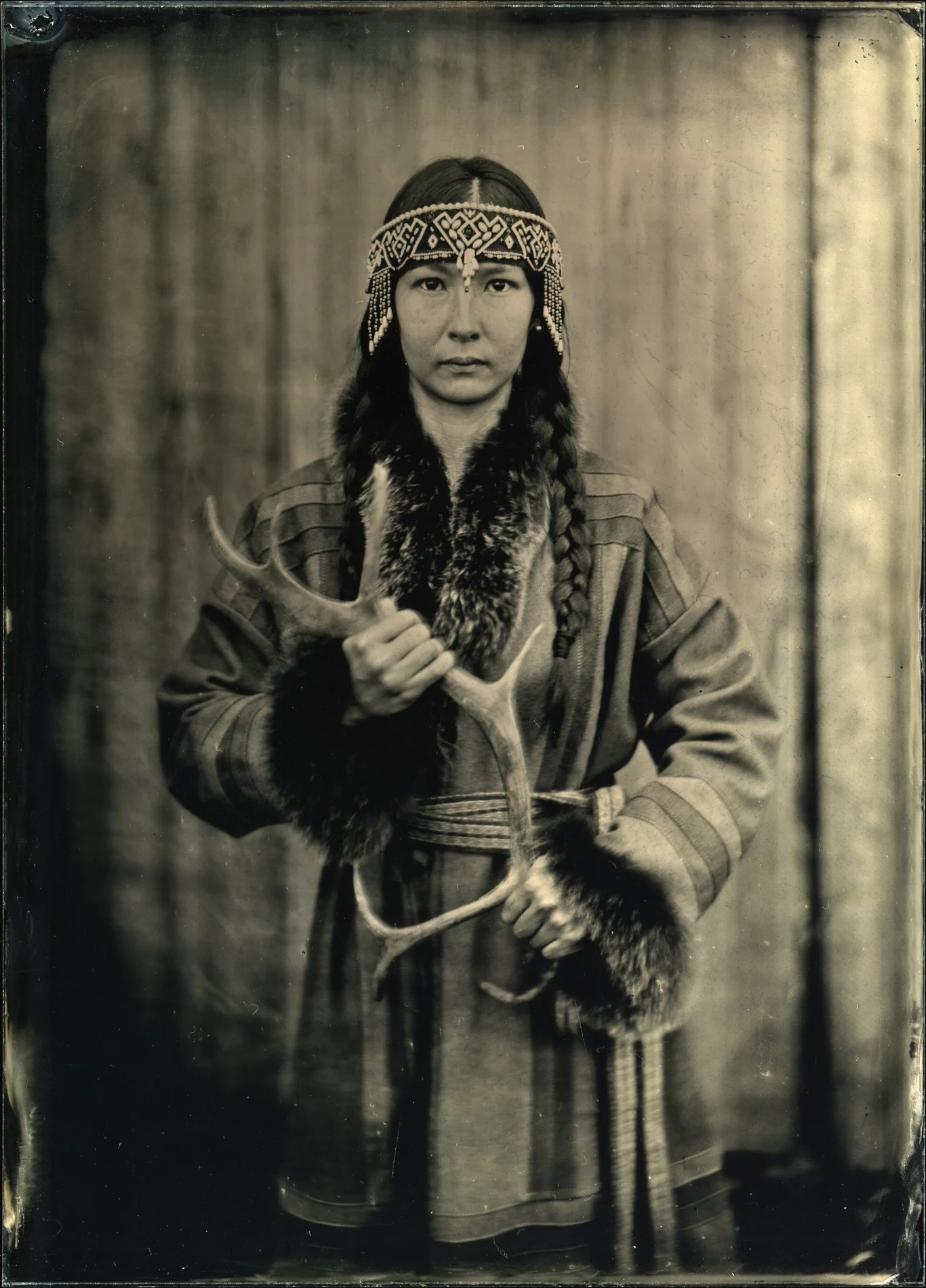
Ambrotype portrait of a woman holding antlers

A portrait in silver

Into view.

In the studio’s half-light, a portrait takes shape.
Your likeness emerges in silver.

A little further

Since 1851

The alchemy
of light

In 1851, Frederick Scott Archer published his wet collodion process. Photography had found a recipe in which light, collodion and silver meet on a thin plate of glass.

We still work with this 19th-century process. Each plate is prepared by hand and carries its own small traces: the edge of the collodion, the sheen of silver, a faint mark left by a solution. These marks of its making give an ambrotype its character.

Frederick Scott Archer and his discovery
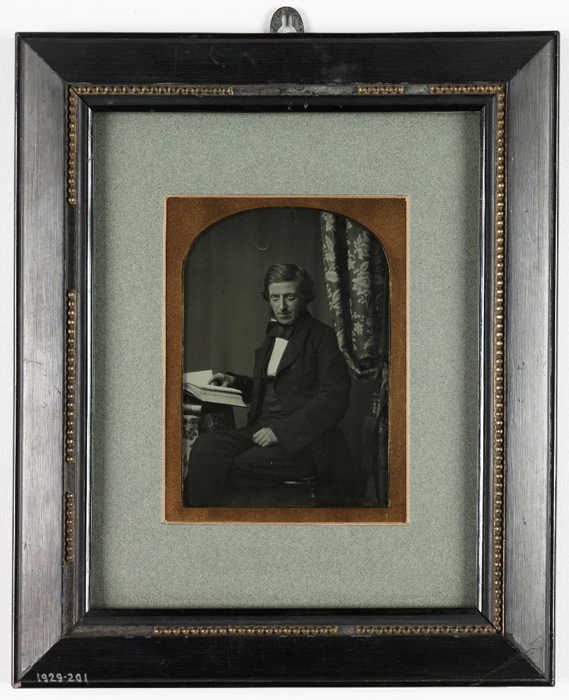
Historical framed portrait of Frederick Scott Archer, circa 1855
Frederick Scott Archer, circa 1855.
The Royal Photographic Society Collection / National Media Museum.

Frederick Scott Archer

Archer came to photography through sculpture. In 1847, he began photographing models for his work, looking for greater definition than paper negatives could offer. His experiments with collodion and glass led him to the transformation we still practise at the studio.

His account of the wet collodion process appeared in The Chemist in 1851. Archer chose not to patent the discovery. Other photographers could follow his description and use the process in their own workshops.

A wet plate set a strict condition: preparation, exposure and development all had to be completed before the collodion dried. In 1853, Archer made a portable folding camera with a built-in darkroom. The darkroom could now travel with the camera.
Behind the studio door

In the
darkroom.

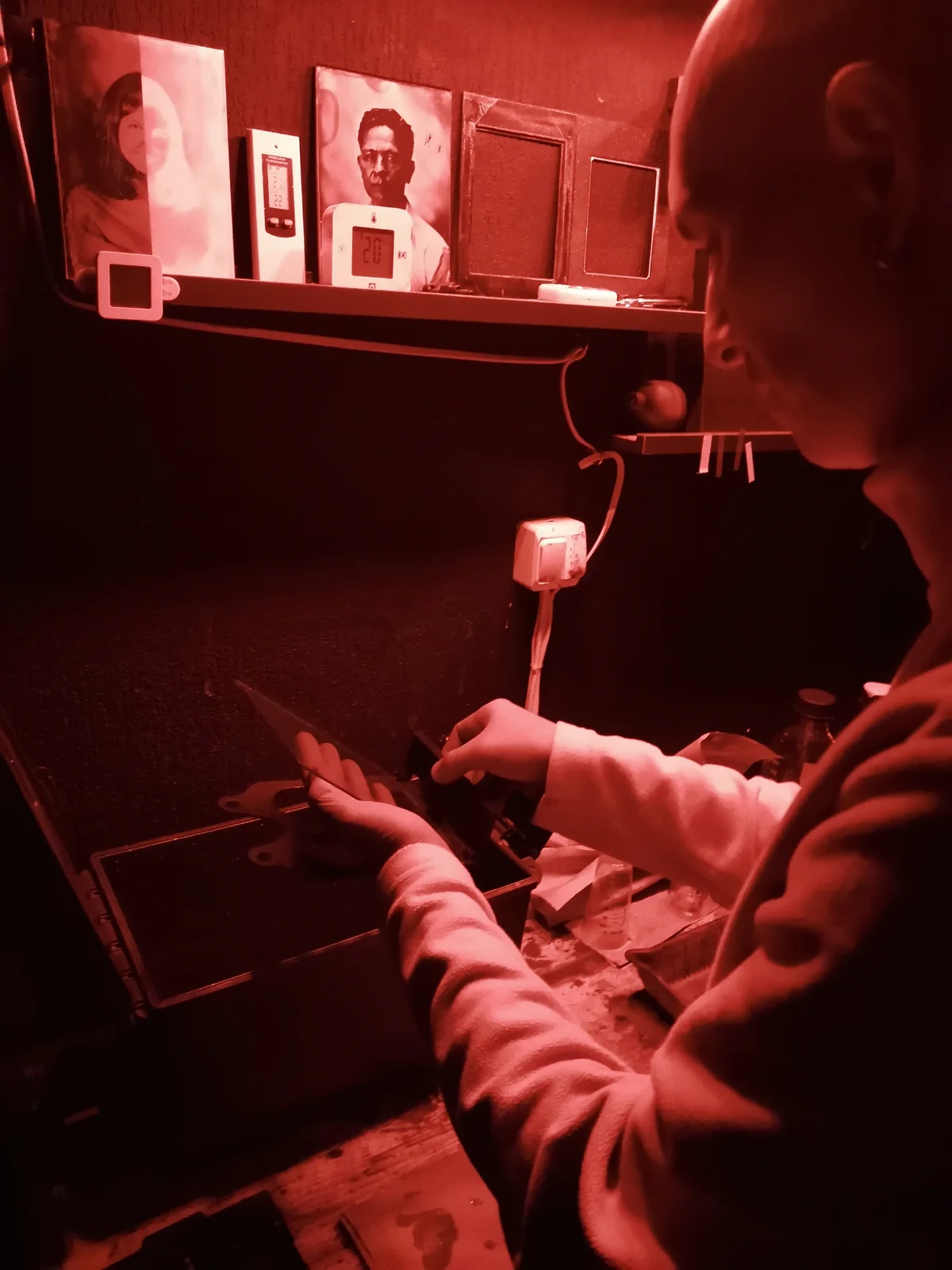
After the exposure, the glass still keeps its secret. Under red light, we apply the developer and the first features begin to emerge. You can watch this quiet transformation with your own eyes.

Working with a glass plate in the red light of the studio darkroom

While the plate is wet

Collodion flows across clean glass, leaving a thin film. A bath of silver nitrate makes it sensitive to light. The portrait must be exposed and the plate developed before this layer dries.

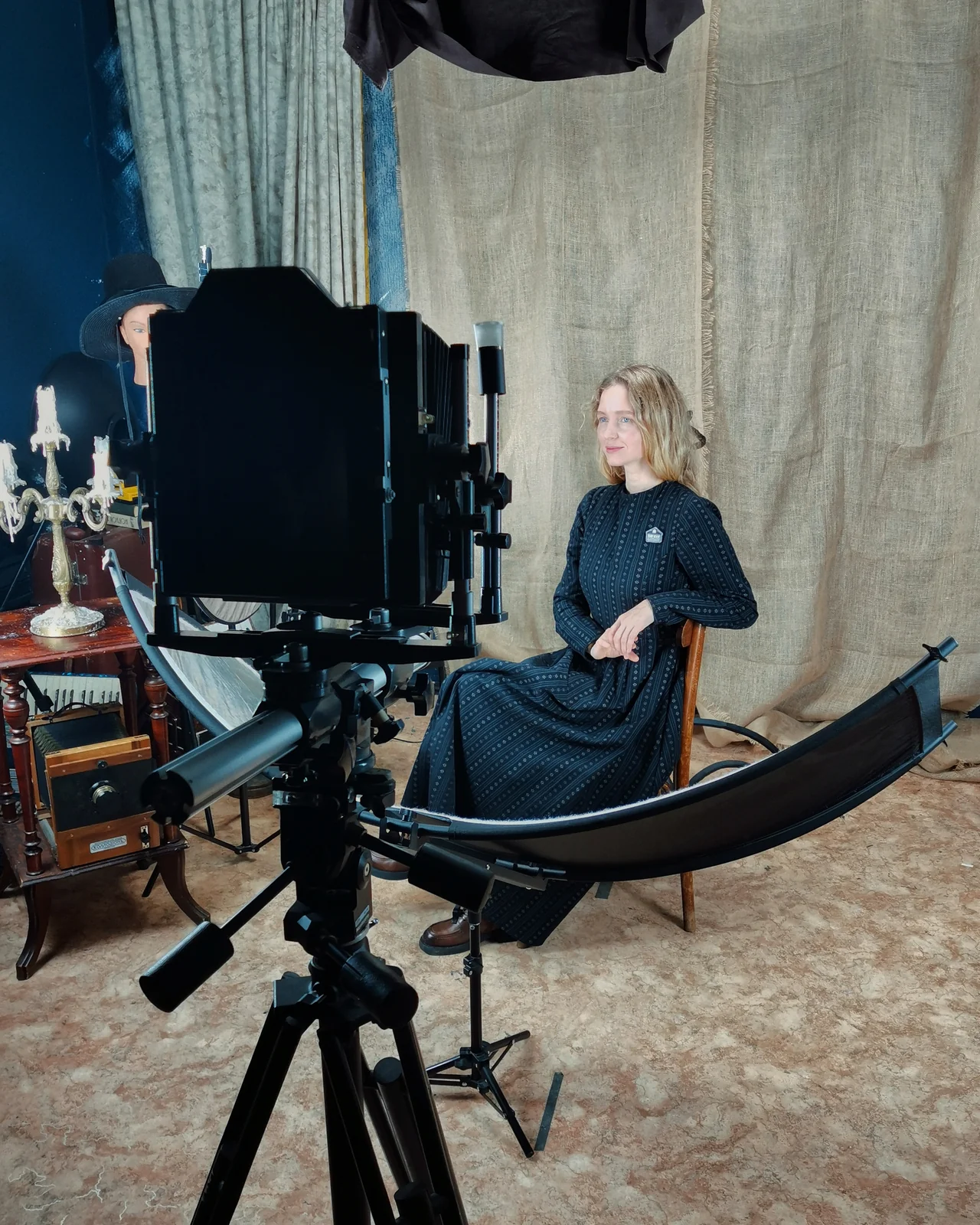
  1. A portrait session with a large-format camera at the studio

    In front of the lens

    We arrange the light and your pose, then place the wet plate in the camera. You hold still for 10–15 seconds. An image is already forming in silver, although the glass still seems empty.

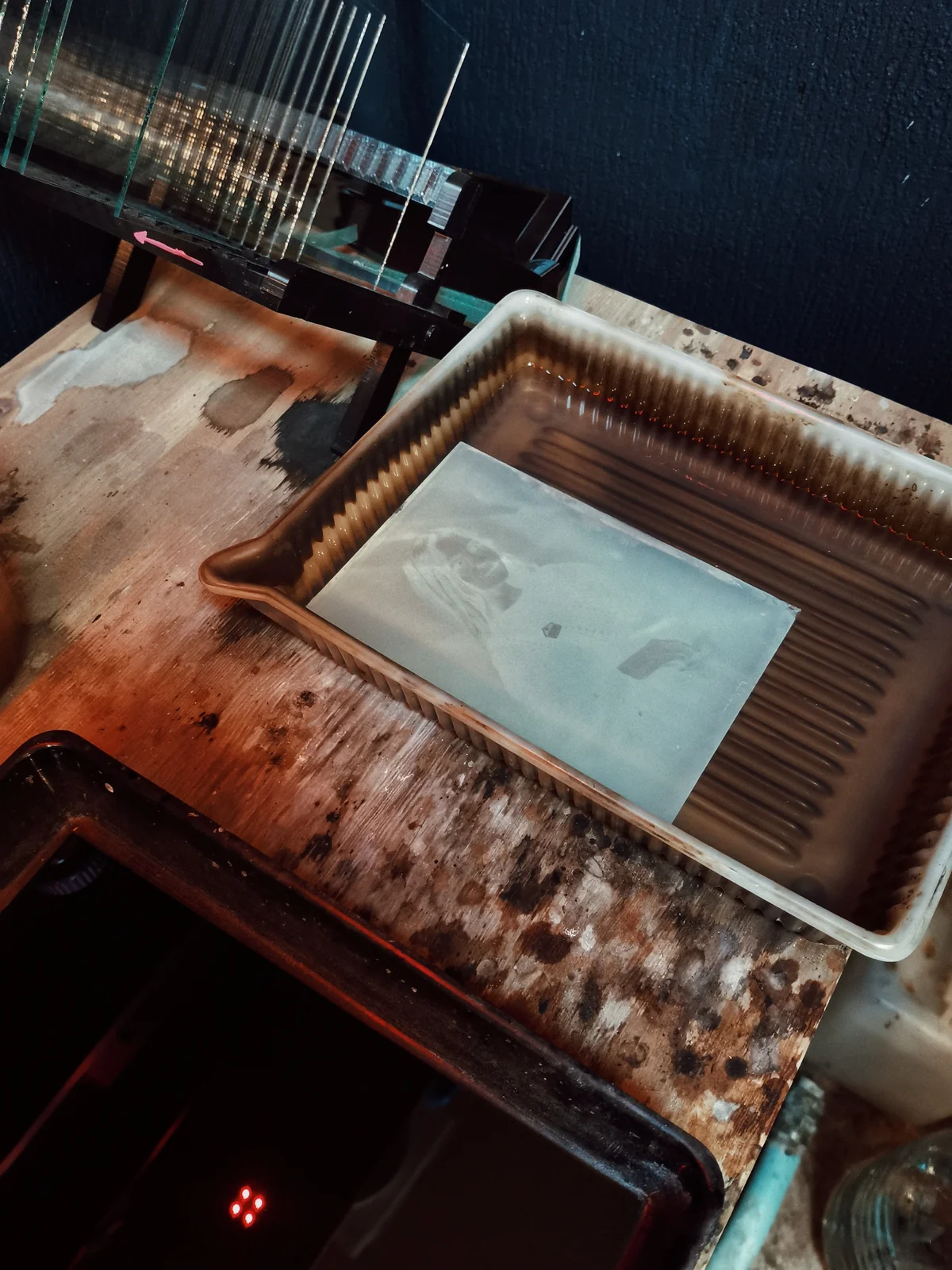
  2. A glass portrait plate in a photographic tray beside a rack of glass plates

    In the solution

    The developer slowly reveals what the light has left: the line of a mouth, a gaze, a fold of fabric. The fixer then removes the remaining light-sensitive salts. The plate can now leave the darkroom and be seen in ordinary light.

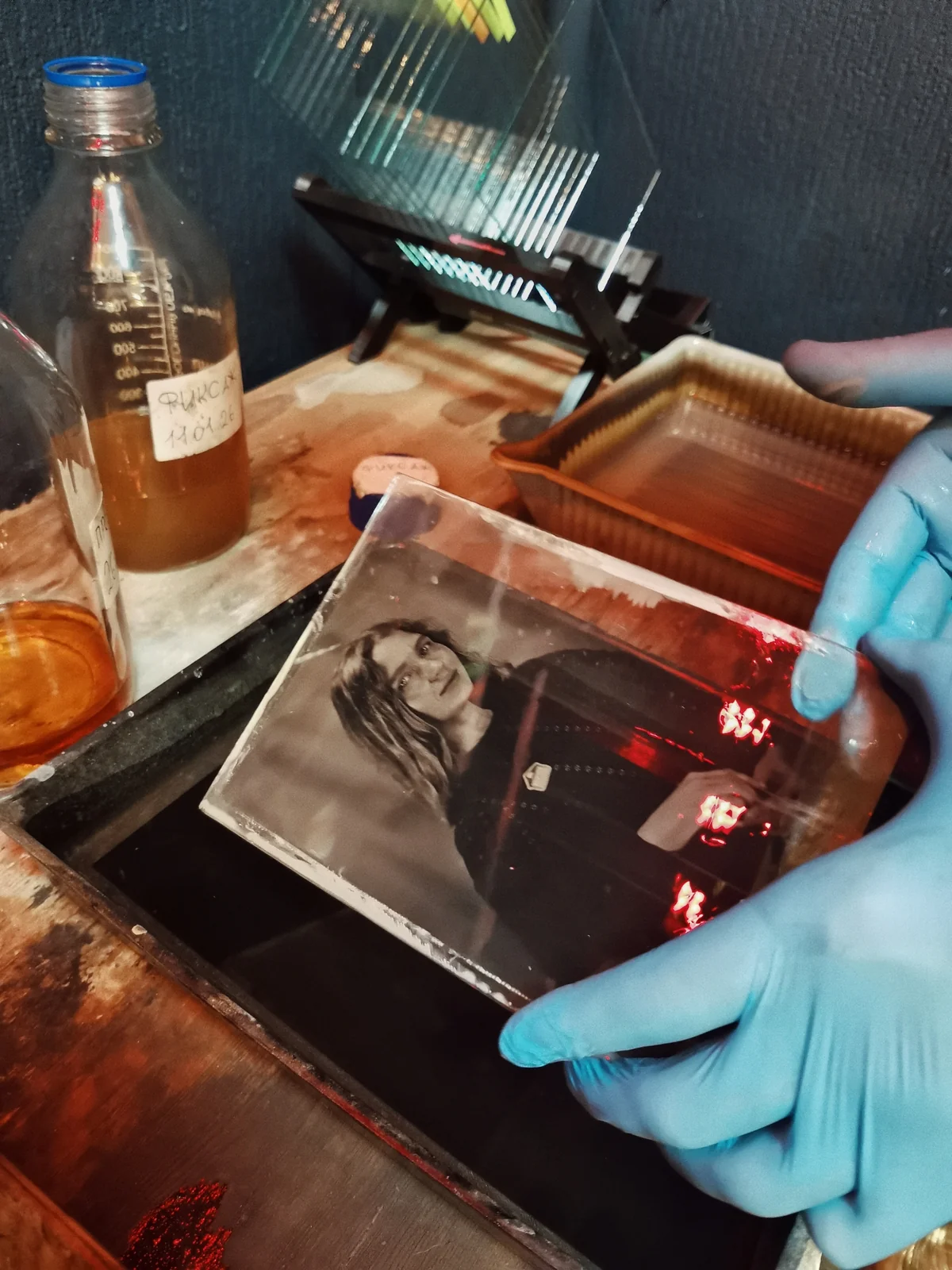
  3. A glass ambrotype portrait held above a photographic tray in gloved hands

    Against the dark

    On clear glass, the image looks like a negative. A dark backing turns it into a luminous portrait: this is the secret of the ambrotype. We wash and dry the plate, varnish it, then paint the reverse.

The same silver chemistry can work on metal. A tintype is made by a related process on a dark-coated plate.

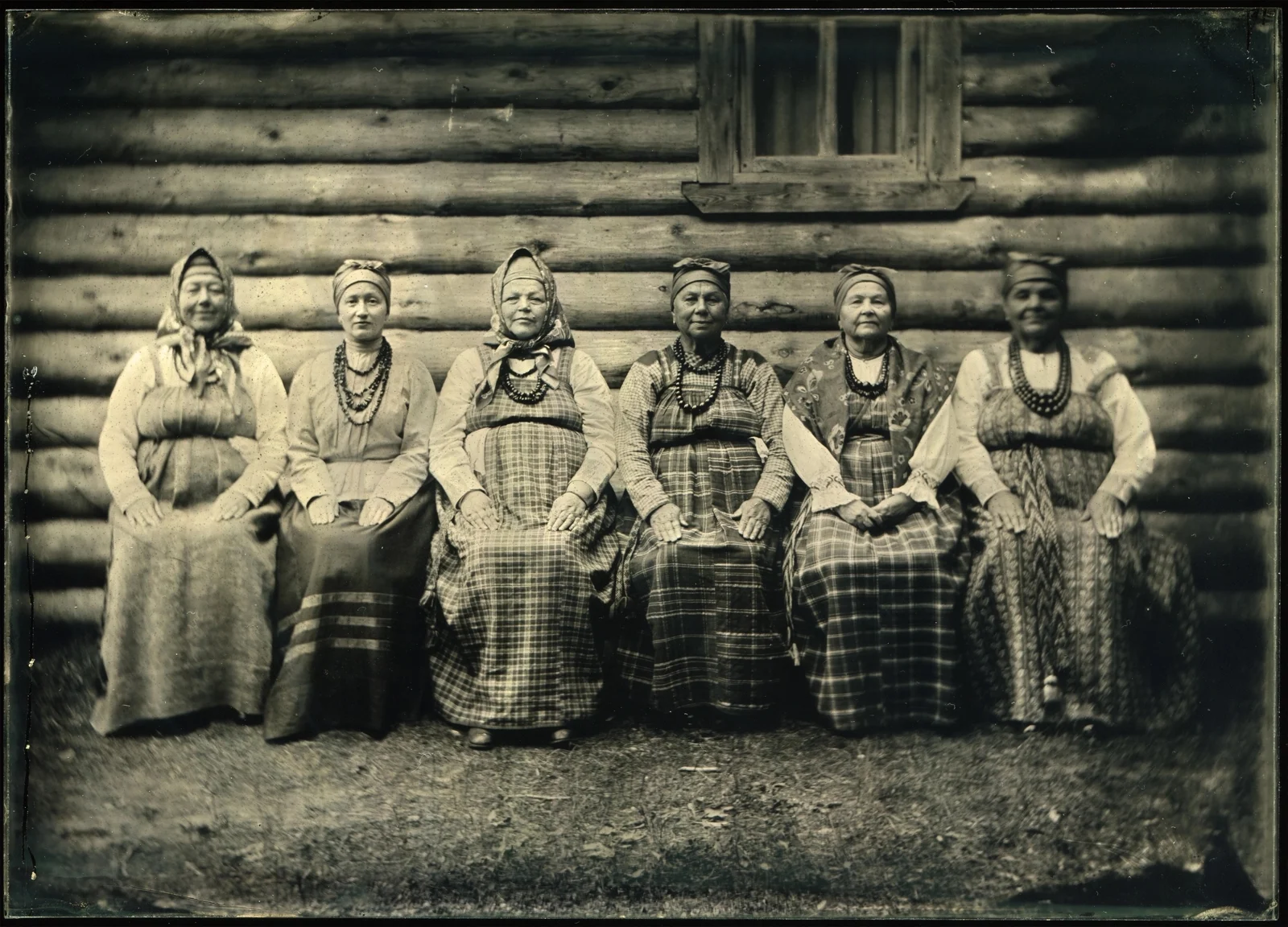
Group ambrotype portrait outside a wooden house

Collodion photography studio

Now it is
your turn.

The everyday rush can wait outside the studio door for a while. Come on your own, with someone close to you or with the whole family. We will find the light and your pose, prepare the glass and make your portrait. Allow around an hour for one ambrotype, including preparation and development.

The old camera has its own way of seeing a familiar face. Everyday clothes are welcome, as is an outfit that has been waiting for the right occasion. If you have a historical look in mind, bring your own costume; we do not have costumes at the studio.

Our studio is in Solombala, at 2 Nikolsky Prospekt, Arkhangelsk, Russia. We open our doors for arranged visits. Please book a session by phone, email or VK before you come.

Message us on VK ↗

A portrait to treasure

Sizes and prices

Allow around an hour for one ambrotype.
Your plate will be ready two days after your session.

Glass

Ambrotype

13×18 cm

One photograph
3 000 ₽

Glass

Ambrotype

18×24 cm

One photograph
5 000 ₽

Metal

Tintype

10×12.5 cm

One photograph
2 000 ₽

The price includes one original: a handmade silver portrait on glass or metal. Frames are sold separately. We recommend framing a glass ambrotype straight away to protect it from accidental knocks; please check frame availability and prices before your session.

A gift certificate is an invitation to a studio where a portrait appears before your eyes. Ask us how to give a portrait sitting.

Book a session

Before your visit

A few questions

What should I wear?

Light-coloured fabrics usually work well on the plate. Choose clothes in which you can comfortably hold still. For a historical portrait, please bring your own costume; we do not have costumes at the studio.

Can we have a family portrait?

The whole family is welcome. We can photograph groups, within reason. Please discuss a larger party with us in advance so we can make room for everyone in front of the camera.

Can I bring a pet?

You can bring a pet if it is very calm and well behaved. The camera needs 10–15 seconds of stillness, so please discuss this kind of portrait with us in advance.

Will I have to sit still without blinking for hours?

You need to hold still and keep your eyes open for about 10–15 seconds. The rest of the time goes into preparing the camera and plate, developing the image and taking your first look at the portrait. Allow around an hour for one ambrotype.

What if I blink or the photograph goes wrong?

We will make a new plate if you blink or there is a problem with the photograph. We want it to be a portrait you will wish to keep.

When can I collect my ambrotype?

Two days after your session. The glass still needs to dry, receive its protective varnish and have its reverse painted dark. We will give you the finished plate.

How do I care for it?

Protect the glass from falls and keep alcohol or alcohol-based cleaners away from the varnish. An ambrotype needs no other special care.

Do you make photographs for gravestones?

We do not make photographs for gravestones.

Contact

Let’s arrange
a visit.

Collodion photography studio

2 Nikolsky Prospekt, Solombala
Arkhangelsk, Russia

Find us on the map ↗

By appointment

Please message or call ahead. We will find a time to give your portrait our full attention.

Arrange a session ↗